
Why informed decision-making has become one of the most important advantages a trader can have
Financial markets have never been more accessible.
Today, anyone with a smartphone, an internet connection, and a trading account can access global markets in a matter of minutes. Information is available instantly. Market data is updated in real time. Educational content can be found with a single search.
Yet despite this unprecedented access, one challenge remains remarkably consistent:
Many people enter financial markets before they fully understand how those markets work.
The result is a gap between access and understanding.
And that gap is precisely why investor education has become one of the most important topics in modern financial services.
As markets continue to evolve and participation expands across regions such as the Middle East and North Africa, the ability to make informed decisions is increasingly becoming a competitive advantage in its own right.
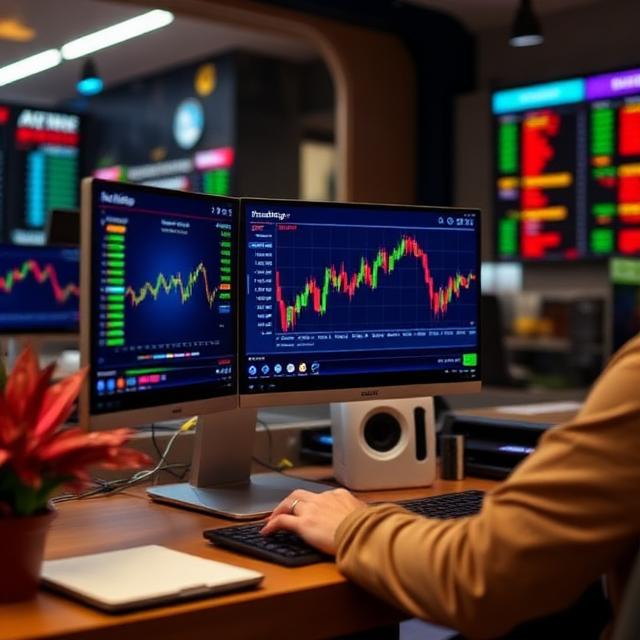
Over the last decade, technology has transformed the financial industry.
Trading platforms have become more user-friendly. Account opening processes have become faster. Mobile applications have brought global markets into people’s pockets.
These developments have created significant opportunities for market participation.
However, accessibility alone does not automatically create knowledge.
Being able to access a market and understanding how that market functions are two very different things.
Many new participants quickly discover that financial markets involve far more than identifying potential opportunities. Risk management, market structure, trading psychology, leverage, liquidity, and volatility all play important roles in long-term outcomes.
Without understanding these concepts, access alone can create false confidence rather than informed participation.
One of the most important benefits of investor education is its ability to improve decision-making.
Financial markets are influenced by countless variables — economic events, corporate developments, geopolitical factors, interest rates, and market sentiment.
No educational programme can eliminate uncertainty.
What education can do is help market participants respond to uncertainty more effectively.
Educated investors are often better equipped to evaluate information, understand risk, recognise limitations, and avoid emotional decision-making. Rather than reacting impulsively to headlines or market fluctuations, they are more likely to approach decisions with structure and discipline.
Over time, this can significantly influence how individuals engage with financial markets.
Perhaps the most valuable outcome of education is not increased confidence.
It is improved risk awareness.
One of the most common misconceptions in financial markets is the belief that success comes primarily from identifying opportunities. In reality, successful market participation often depends just as much on understanding risk.
Investor education helps participants understand concepts such as:
These concepts may appear simple. Yet they form the foundation upon which responsible financial participation is built.
Understanding risk does not eliminate it.
But it allows individuals to approach it with greater awareness and preparation.
Around the world, regulators, educational institutions, and financial organisations are placing greater emphasis on financial literacy.
This trend reflects a broader recognition that healthy financial markets depend on informed participants.
Financial literacy extends beyond trading. It includes budgeting, saving, investing, debt management, and long-term financial planning. Within financial markets specifically, literacy helps participants better understand the products, services, and opportunities available to them.
As participation continues to grow, financial literacy will likely become even more important as a foundation for responsible market engagement.
There is an important difference between confidence and understanding.
Short-term confidence can be created by market excitement, social media trends, or temporary success.
Long-term confidence is built through knowledge.
When investors understand the principles behind their decisions, they become less dependent on speculation and external influence. They develop the ability to evaluate opportunities independently. They become more resilient during periods of uncertainty. And they are better positioned to maintain consistency over time.
For this reason, education should not be viewed as a one-time activity.
It is an ongoing process that evolves alongside the markets themselves.
Not all financial content is created equal.
The rise of social media has created extraordinary opportunities for financial education. It has also created significant risks.
Across platforms, a growing number of voices offer trading tips, investment recommendations, and market predictions — often without the qualifications, context, or accountability that responsible financial guidance requires. The phenomenon of the financial influencer, or finfluencer, has introduced millions of people to financial markets. It has also introduced them to information that is frequently incomplete, misleading, or simply wrong.
The consequences can be significant.
Traders who act on unverified social media advice, chase trends driven by online momentum, or make decisions based on fear of missing out rather than genuine analysis are exposing themselves to risks that education would have helped them identify and manage.
Financial misinformation is not always deliberate. In many cases, it is simply the result of individuals sharing their own experiences without adequate understanding of the broader market context.
But the impact on those who follow that advice can be very real.
This is precisely why the source of financial information matters. Regulated financial institutions, established educational resources, and verified market data provide a foundation that social media commentary, however well-intentioned, rarely can.
In an environment where financial content is everywhere, the ability to evaluate the quality and credibility of information has become a critical skill in its own right.
Investor education is not solely the responsibility of individuals.
Financial institutions also play an important role.
Firms that invest in educational resources contribute to a healthier financial ecosystem. By providing access to learning materials, market insights, webinars, and educational content, financial services providers can help clients develop a stronger understanding of the markets in which they participate.
This benefits both clients and the industry as a whole.
More informed participants tend to make better decisions, set more realistic expectations, and engage with markets more responsibly.
Education therefore becomes more than a support function.
It becomes part of the overall client experience.
The future of financial markets will almost certainly involve greater technology, more automation, and faster access to information.
Artificial intelligence will continue to influence how market data is analysed. Digital platforms will continue to evolve. New financial products will emerge.
Yet despite these changes, one principle is unlikely to change:
Knowledge will remain one of the most valuable assets any investor can possess.
Technology may improve access.
But education improves understanding.
And understanding remains essential to long-term participation in financial markets.
As financial markets continue to evolve, investor education is becoming increasingly important for both traders and financial services providers.
The firms that invest in helping clients understand markets, risk management, and responsible participation are contributing to a stronger and more sustainable financial ecosystem.
At Wisuno, investor education is not viewed as a separate initiative. It is part of our broader commitment to transparency, accountability, and informed decision-making.
Through our Trade with Confidence campaign, our ongoing educational content, and our market insights across the UAE and the wider MENA region, we aim to help traders at every level develop a deeper understanding of the markets they participate in.
Because better-informed traders are not just better-equipped traders.
They are more confident, more resilient, and more empowered participants in financial markets.
Modern financial markets offer extraordinary opportunities for participation.
However, access alone is not enough.
The ability to make informed decisions, understand risk, and evaluate opportunities critically has become increasingly important in today’s financial environment.
Investor education helps bridge the gap between access and understanding.
It supports better decisions. Stronger risk awareness. And greater long-term confidence.
As financial markets continue to evolve, education will remain one of the most important foundations of responsible participation.
Because in investing and trading alike, informed decisions will always outperform uninformed ones.
Wisuno is authorised by the UAE Capital Markets Authority (CMA), formerly known as the Securities and Commodities Authority (SCA). For more information, visit www.wisuno.com
Risk Warning: Trading in forex and CFDs carries a high level of risk and may not be suitable for all investors. You may lose your invested capital. Please ensure you fully understand the risks involved before trading.
Office 12, 3rd Floor, IMAD Complex, Ile Du Port, Mahe, Republic of Seychelles


