
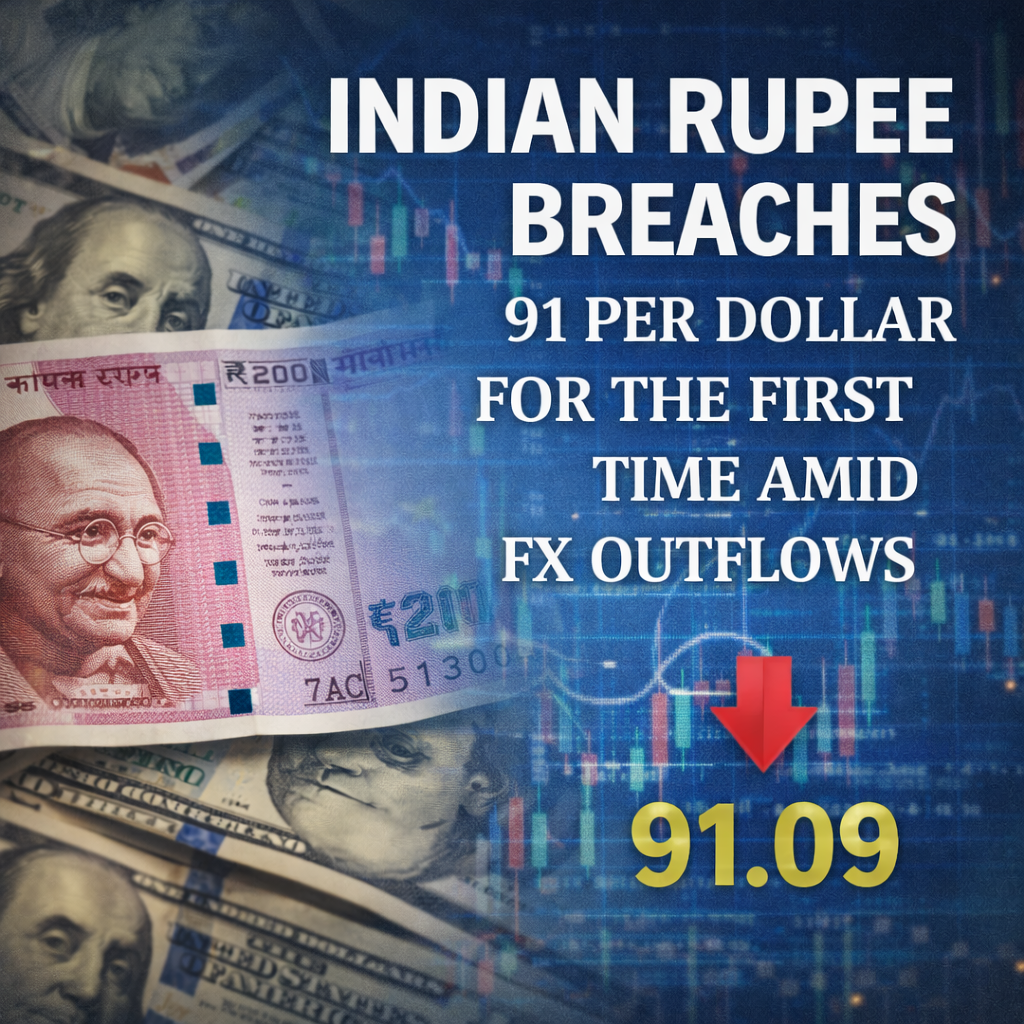
The Indian rupee forecast has turned increasingly cautious after the currency weakened beyond the 91 per dollar mark for the first time, underscoring mounting pressure from foreign exchange outflows and global monetary tightening. The breach represents a psychological and technical milestone for Asia’s third largest economy as investors reassess exposure to emerging markets amid persistent strength in the US dollar. Currency traders reported elevated volatility as overseas funds accelerated withdrawals from Indian equities and bonds, amplifying concerns around balance of payments stability and inflation control.
Capital Outflows Weigh on the Indian Rupee Forecast
Foreign portfolio investors have been consistent sellers of Indian assets in recent weeks, driven by higher US Treasury yields and expectations that global interest rates will remain elevated for longer. These outflows have placed sustained pressure on the Indian rupee forecast, particularly as demand for dollars increases from importers and corporate hedgers. Market participants note that oil import payments and technology sector dollar demand have further contributed to downward momentum in the rupee.
Dollar Strength Reshapes Emerging Market Currency Dynamics
The Indian rupee forecast is closely tied to the broader strength of the US dollar, which has benefited from resilient economic data and firm Federal Reserve policy signals. As the dollar index remains near multi month highs, emerging market currencies have struggled to stabilise. Analysts argue that the rupee’s decline reflects not just domestic fundamentals but also global capital rotation away from risk sensitive assets toward dollar denominated instruments.
Central Bank Response and Market Intervention
The Reserve Bank of India has taken measured steps to smooth volatility rather than defend a specific exchange rate level. Officials have reiterated that India holds adequate foreign exchange reserves to manage disorderly movements while allowing market forces to play their role. The Indian rupee forecast now hinges on whether central bank intervention intensifies should depreciation accelerate further. Traders are closely monitoring liquidity conditions and forward market signals for clues about policy intent.
Inflation and Import Cost Pressures
A weaker rupee has direct implications for inflation, particularly through higher import costs for energy and raw materials. The Indian rupee forecast has therefore become a key variable in inflation projections ahead of upcoming policy meetings. Economists warn that prolonged depreciation could complicate efforts to keep consumer prices within the central bank’s target range, especially if global commodity prices rebound.
Corporate and Trade Implications
Exporters may benefit from a weaker currency, but the broader corporate sector faces increased hedging costs and margin pressure. Companies with significant foreign currency liabilities are particularly exposed as the Indian rupee forecast points to continued volatility. Trade balances could see mixed effects as export competitiveness improves while import bills rise.
Outlook for the Indian Rupee
Looking ahead, the Indian rupee forecast remains sensitive to global interest rate expectations, oil price movements, and foreign investment flows. While near term risks remain skewed to the downside, some strategists believe the pace of depreciation may slow if global risk sentiment stabilises. The breach of 91 per dollar marks a critical juncture that will test policy credibility and investor confidence in the months ahead.


