
TerraUSD Fraud Case Reaches Its Final Chapter
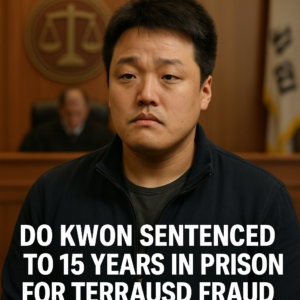
The TerraUSD fraud case reached a dramatic conclusion as Do Kwon, co founder of Terraform Labs, was sentenced to 15 years in prison for his role in one of the largest financial collapses in cryptocurrency history. Regulators and international prosecutors described the TerraUSD fraud as a catastrophic event that wiped out more than 40 billion dollars in combined value across UST and LUNA. The sentencing marks a turning point for crypto regulation and accountability, establishing a milestone in how legal systems treat large scale digital asset misconduct. The TerraUSD fraud case has been closely watched by governments, investors, exchanges and analysts who continue to dissect the collapse for clues about future risk management and compliance structures.
The TerraUSD fraud scandal revolved around the algorithmic stablecoin UST, which was marketed as a reliable and fully decentralised dollar pegged token. Instead of holding traditional collateral, UST relied on an algorithmic mechanism tied to LUNA to maintain its peg. When market pressure increased in May 2022, the peg failed and the system spiralled into a death loop that destroyed tens of billions in value. The TerraUSD fraud case revealed that the underlying mechanism was unstable and that investors had been misled about risk, sustainability and technical safeguards.
How the TerraUSD Fraud Was Built
The TerraUSD fraud originated from a flawed design and misleading assurances about the stability of an algorithmic stablecoin. Terraform Labs promoted UST as a breakthrough in stablecoin engineering, claiming it was decentralised, self stabilising and capable of sustaining a one dollar peg under all conditions. Investors relied on these promises despite criticisms from economists who warned that algorithmic stablecoins were vulnerable to liquidity shocks.
The Anchor protocol, a key part of the Terra ecosystem, offered unsustainably high yields of up to 20 percent to attract deposits. The prosecution argued that Anchor’s yields were central to the TerraUSD fraud because the rates were not based on genuine economic activity. Instead, they were artificially subsidised to lure investors and maintain the illusion of stability. As long as new deposits flowed in, the system appeared functional. Once investor inflows slowed, the mechanics underlying the TerraUSD fraud began to unravel.
Internal communications revealed during the trial showed that executives were aware of the risks and weaknesses within the system but continued to promote UST as safe. This lack of transparency strengthened the prosecution’s argument that the TerraUSD fraud was not just a technical failure but a deliberate scheme that misrepresented the true nature of the asset.
The Collapse That Exposed the TerraUSD Fraud
In May 2022, UST began losing its peg amid broader market volatility. The mechanism that was supposed to arbitrage price differences between UST and LUNA failed as selling pressure intensified. LUNA entered a hyperinflationary spiral, with its supply increasing exponentially within days. The TerraUSD fraud became undeniable when UST collapsed to a few cents, destroying savings, trading portfolios and institutional investments worldwide.
The speed of the collapse shocked regulators. Investors watched billions evaporate within hours as exchanges halted trading and blockchain operations slowed. The TerraUSD fraud revealed critical flaws not only in Terraform Labs’ design but also in the oversight of exchanges and investment platforms that had marketed UST as a low risk asset.
The global fallout from the TerraUSD fraud was immediate. Hedge funds closed positions, decentralised finance markets contracted and liquidity across major platforms deteriorated. The collapse accelerated crypto winter conditions and contributed to the downfall of prominent firms that had significant exposure to Terra assets.
Legal Proceedings That Defined the TerraUSD Fraud Case
Following the collapse, a wave of international legal action began. South Korean prosecutors issued arrest warrants for Do Kwon and several Terraform Labs executives. Interpol added Kwon to its red notice list, leading to months of pursuit before his eventual detention. The TerraUSD fraud case then expanded across multiple jurisdictions including the United States, Singapore and Montenegro.
Prosecutors argued that the TerraUSD fraud constituted intentional deception because Terraform Labs misrepresented the stability and collateral mechanisms supporting UST. Witnesses testified that internal modelling highlighted the risks of depegging long before the collapse. Yet public messaging continued to portray UST as safe.
The trial highlighted misleading marketing claims, inaccurate technical disclosures and attempts to manipulate investor perception. These findings convinced the court that the TerraUSD fraud was not simply a failed experiment but a systemic act of financial misconduct.
Do Kwon’s Defence and Court Response
Do Kwon’s defence argued that the collapse was a technological failure rather than an intentional TerraUSD fraud. He claimed that algorithmic stablecoins were experimental by nature and that Terraform Labs acted in line with industry standards. The defence attempted to position the collapse as a market driven event.
However, the court rejected this argument after reviewing internal documents, commentary from developers and communication channels that showed discrepancies between public claims and internal awareness of risks. The ruling stressed that the TerraUSD fraud involved intentional misrepresentation, irresponsible governance and the exploitation of investor trust.
Impact of the TerraUSD Fraud on Investors
The TerraUSD fraud left millions of investors with significant losses. Retail traders who believed UST was a safe asset saw savings wiped out. Institutional investors who had large exposure to Terra faced liquidity crises. Venture capital funds that heavily invested in the ecosystem faced reputational damage and regulatory scrutiny.
Some investors have attempted to recover losses through class action lawsuits. Others have sought compensation through international arbitration against Terraform Labs and associated entities. The TerraUSD fraud has become a landmark case shaping expectations around investor protection in the crypto sector.
Broader Regulatory Consequences of the TerraUSD Fraud
The TerraUSD fraud accelerated global regulatory action. Many jurisdictions revised stablecoin frameworks following the collapse. Governments demanded clearer collateral requirements, stricter reserve auditing and enhanced disclosures for digital assets marketed as stable. The case demonstrated the dangers of unregulated high yield products tied to unstable financial structures.
Financial regulators also reassessed supervision of decentralised finance. The TerraUSD fraud showed that complex blockchain systems could pose systemic risks when widely adopted without adequate safety mechanisms. Policy makers now emphasise stress testing, governance standards and environmental resilience in crypto architecture.
Several countries, including the United States, have proposed new legislation specifically addressing stablecoins after analysing the TerraUSD fraud. These proposals include prohibiting algorithmic stablecoins that lack conventional reserves unless they meet strict compliance and transparency requirements.
How the TerraUSD Fraud Changed Public Perception of Crypto
The TerraUSD fraud deeply affected public trust in cryptocurrency markets. Media coverage of the collapse framed it as a preventable disaster caused by reckless financial engineering and lack of oversight. Retail investors became more cautious, and many paused participation in decentralised finance platforms.
Despite this, some within the industry argue that the TerraUSD fraud will ultimately strengthen the crypto ecosystem by eliminating unsustainable models and encouraging innovation in safer and more transparent directions. The collapse forced exchanges and protocols to improve due diligence. Investors now demand higher levels of proof, verification and accountability.
What Comes Next for Terraform Labs and the Industry
Terraform Labs faces multiple lawsuits, compensation claims and regulatory penalties across several countries. The TerraUSD fraud has left the company weakened and with minimal institutional support. It is unlikely to regain its former influence in the blockchain ecosystem.
Industry wide, the TerraUSD fraud continues to influence stablecoin design. Developers and regulators now recognise the dangers of algorithmic models that rely solely on market incentives. New stablecoin proposals prioritise collateralisation, transparency and risk control. This shift reflects lessons learned from the TerraUSD fraud and aims to prevent another large scale collapse.
The TerraUSD fraud case has reshaped global understanding of stablecoins, risk management and digital asset accountability. Do Kwon’s 15 year prison sentence marks one of the most significant legal outcomes in crypto history and sends a message to developers, exchanges and investors worldwide. The TerraUSD fraud exposed deep flaws in algorithmic stablecoin design and demonstrated the need for comprehensive oversight in the rapidly evolving crypto landscape. While the collapse caused immense damage, it has also driven reforms that may strengthen the long term resilience of the cryptocurrency sector.