
Ghana Illegal Forex Trading Crackdown Sparks Nationwide Debate
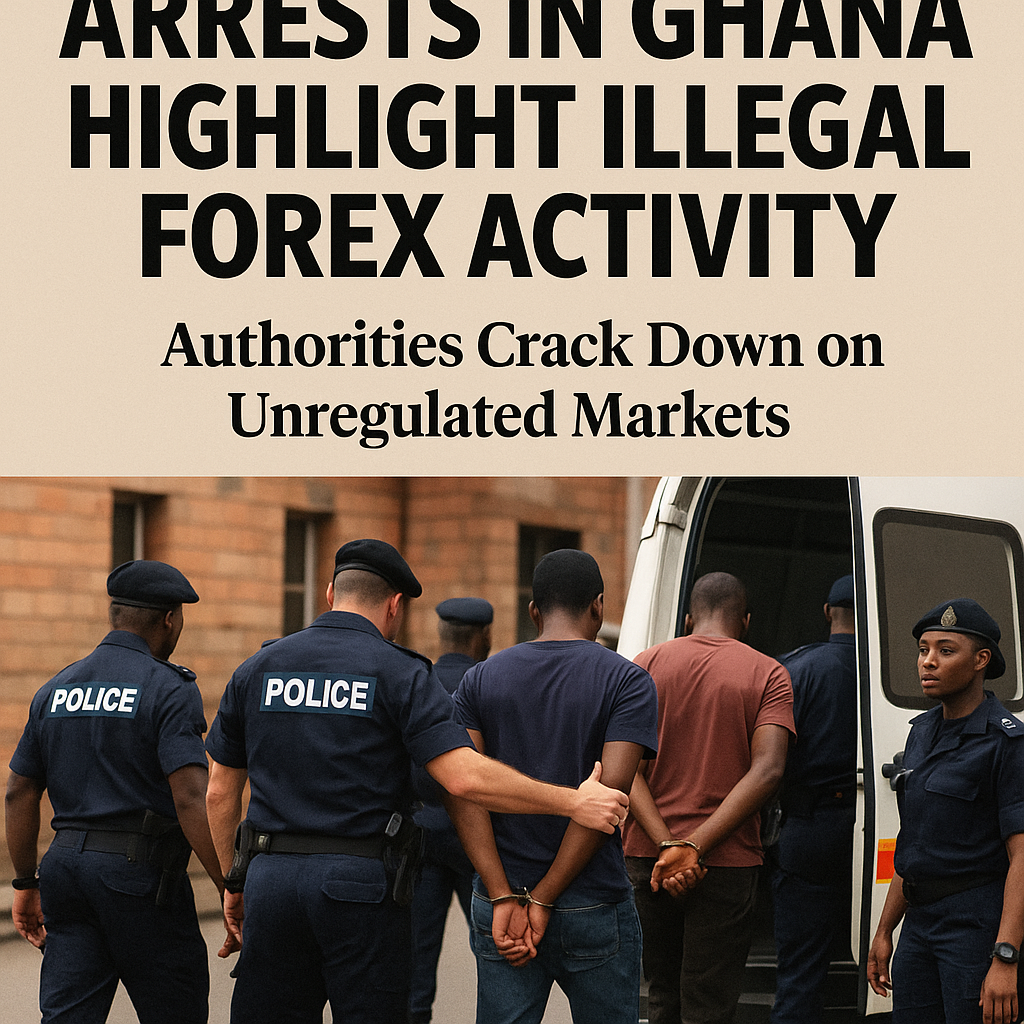
A major crackdown on Ghana illegal forex trading has triggered nationwide debate as authorities arrested 41 individuals accused of operating unlicensed foreign exchange businesses in Accra and other key commercial hubs. The arrests, which include both Ghanaian citizens and foreign nationals, mark one of the most aggressive enforcement actions taken to date against Ghana illegal forex trading networks. Law enforcement officials say the suspects were running unregulated currency exchange services, manipulating exchange rates and facilitating illegal currency flows across borders.
The operation has intensified conversations across Ghana’s financial sector as regulators aim to stabilise the domestic currency, close illegal trading loops and restore confidence in formal markets. Ghana illegal forex trading has been a long standing challenge, with underground operators offering rates that disrupt the official market and weaken public trust.
The recent sweep is part of a broader national strategy to enforce compliance, improve transparency and ensure that forex activity supports economic stability. As Ghana faces ongoing currency pressure and rising inflation, tackling Ghana illegal forex trading has become a policy priority.
How Ghana Illegal Forex Trading Networks Operate
Ghana illegal forex trading operates through a combination of street level traders, WhatsApp groups, unregistered money exchangers and cross border networks. These operations often function without licences, without record keeping and without oversight. Many customers turn to Ghana illegal forex trading because operators offer exchange rates higher than those available at banks or licensed bureaus. However, these inflated rates distort the official forex market.
The Ghana illegal forex trading ecosystem typically works as follows. Unlicensed traders acquire foreign currency from travellers, private businesses and intermediaries. They then resell that currency at higher prices. Because the deals are not recorded, the transactions evade taxation and regulatory monitoring. A portion of Ghana illegal forex trading involves collaboration with overseas actors who help move funds through informal channels.
Authorities say these hidden networks undermine financial stability. Ghana illegal forex trading reduces the effectiveness of monetary policy and contributes to artificial currency scarcity. In many cases, illegal traders also participate in money laundering activities, using forex exchanges to conceal proceeds from unrelated crimes.
Why Ghana Illegal Forex Trading Has Grown
Ghana illegal forex trading has expanded over the years due to a combination of economic, social and regulatory factors. One core reason is limited access to official forex supply. Many individuals face difficulties obtaining foreign currency at banks due to shortages or bureaucratic barriers. As a result, Ghana illegal forex trading becomes a more immediate option.
Consumer demand also plays a role. Importers, students travelling abroad, medical patients and small businesses often require dollars on short notice. Ghana illegal forex trading networks provide faster transactions and fewer formalities. In an economy where volatility is frequent, convenience often outweighs legality.
Weak regulatory enforcement historically allowed Ghana illegal forex trading to flourish without significant fear of consequences. While laws prohibiting unlicensed forex operations exist, enforcement was inconsistent. This allowed illegal networks to expand and infiltrate major cities.
The rise of digital communication has further accelerated Ghana illegal forex trading. Social media platforms and encrypted messaging services allow traders to advertise rates, negotiate deals and connect with new customers discreetly. This digitised approach makes the networks harder to detect.
Details of the Arrest Operation Targeting Ghana Illegal Forex Trading
Law enforcement agencies coordinated the arrests after months of surveillance targeting major Ghana illegal forex trading hotspots. Teams conducted simultaneous raids in Accra, Kasoa and Kumasi. The suspects were found with large sums of local and foreign currency, unregistered point of sale machines and multiple mobile phones containing evidence of illicit transactions.
Authorities revealed that some of those arrested belonged to a network that operated under a structured hierarchy. Senior members coordinated large volume forex deals while junior members acted as runners, collecting cash and facilitating transactions. In one location, investigators seized logs that listed daily foreign currency volume, suggesting that the Ghana illegal forex trading network handled hundreds of thousands of Ghanaian cedis in circulation each week.
Among the arrested were several foreign nationals, indicating cross border linkages. Authorities say the inclusion of non Ghanaian operatives highlights the international dimension of Ghana illegal forex trading. These networks often collaborate with operators in Nigeria, Togo, Ivory Coast and beyond.
Government and Regulatory Reaction to Ghana Illegal Forex Trading
Ghana’s government has issued strong statements reinforcing its commitment to eliminating illegal forex activity. The Ministry of Finance emphasised that Ghana illegal forex trading creates parallel markets that damage the national currency. The Bank of Ghana also issued warnings that any individual or company participating in unlicensed forex operations will face prosecution.
The Bank of Ghana has implemented policy measures to stabilise the currency, including increased forex auctions, strengthened oversight over licensed forex bureaus and closer monitoring of commercial bank transactions. These actions aim to reduce the need for Ghana illegal forex trading by improving access to regulated forex channels.
Regulators are now reviewing potential reforms to enhance compliance. These include digital tracking systems for licensed bureaus, mandatory renewal assessments and heavier fines for non compliant operators. The crackdown is widely viewed as a signal that regulators will no longer tolerate the prevalence of Ghana illegal forex trading.
Impact of Ghana Illegal Forex Trading on the Local Economy
Ghana illegal forex trading has far reaching effects on the economy. One of the most direct consequences is currency instability. Illegal traders manipulate rates to maximise profit, creating artificial demand for foreign currency. This speculation weakens the cedi further.
Ghana illegal forex trading also undermines formal financial institutions. Banks and licensed exchange bureaus lose customers as illegal traders offer more favourable but unrealistic rates. The long term effect is reduced liquidity in formal channels and decreased confidence in official forex systems.
Another consequence is the impact on inflation. When the currency weakens due to Ghana illegal forex trading, import costs rise. These higher costs filter into consumer prices, contributing to rising inflation. The cycle then forces businesses to raise prices, affecting household budgets.
Public revenue losses also occur. Because Ghana illegal forex trading networks do not record transactions, the government loses potential tax income. This loss affects national development plans, infrastructure funding and social programmes.
Consumer Risks Associated With Ghana Illegal Forex Trading
Many individuals underestimate the risks involved in Ghana illegal forex trading. While illegal traders may offer better rates, the lack of oversight exposes customers to fraud, counterfeit currency, robbery and financial loss. Illegal traders often operate in insecure environments without safeguards.
There are also legal consequences. Participating in Ghana illegal forex trading is a criminal offence. Customers found transacting with unlicensed operators may face penalties or be required to justify the source of funds. The risks extend beyond financial loss to potential criminal investigation.
Furthermore, Ghana illegal forex trading networks are linked to money laundering schemes. Consumers unknowingly engaging with these networks risk becoming entangled in broader criminal investigations. The transparency of regulated forex channels protects consumers from these dangers.
Efforts to Curb Ghana Illegal Forex Trading Through Public Awareness
To reduce demand for illegal forex services, authorities are increasing public education efforts. Campaigns aim to inform citizens about the dangers of Ghana illegal forex trading and promote use of licensed financial institutions. These campaigns encourage people to verify whether an operator is registered before transacting.
Social media also plays a role. Influencers, journalists and educators are helping spread information about the risks. Public awareness is essential because Ghana illegal forex trading thrives when consumers are unaware of legal alternatives.
The Bank of Ghana is also considering online search tools that allow consumers to instantly verify the legitimacy of forex bureaus. This digital approach would help combat Ghana illegal forex trading by empowering consumers to identify regulated operators.
Regional Implications of Ghana Illegal Forex Trading
The crackdown has implications beyond Ghana. West Africa has experienced a growing wave of illegal forex trading in recent years. Weak regional currency performance, economic instability and inconsistent regulation have created fertile conditions for illegal operators.
The crackdown in Ghana sends a message to neighbouring countries that enforcement is strengthening. It also highlights the need for regional cooperation. Illegal forex networks often move funds across multiple borders. Countries like Nigeria, Ivory Coast, Togo and Benin face similar challenges. Collaboration will be necessary to dismantle cross border Ghana illegal forex trading rings.
What Comes Next for Ghana Illegal Forex Trading Enforcement
Authorities say the arrests are only the beginning. Investigations continue as officials analyse seized devices, financial records and communication networks. More arrests are expected as surveillance efforts expand.
Regulators plan to tighten existing laws to further discourage Ghana illegal forex trading. Proposed measures include higher capital requirements for licensed operators, more frequent audits and stricter digital monitoring tools.
Many experts advise creating long term solutions that address the root causes of Ghana illegal forex trading. These include improving forex availability, strengthening the currency through export growth and enabling more efficient banking services.
The arrests made in connection with Ghana illegal forex trading mark a significant moment for the country’s financial regulatory landscape. The crackdown exposes the scale and sophistication of illegal networks while reinforcing the government’s determination to restore stability to the forex market. As enforcement intensifies, consumers and businesses are encouraged to rely on regulated channels. The long term success of efforts to eliminate Ghana illegal forex trading will depend on effective regulation, public awareness and regional cooperation.


