
Forex Market Volatility Surges as Central Banks Prepare to Deliver Critical Policy Updates
Forex market volatility has surged to its highest level in months as traders across global financial hubs position themselves ahead of key interest rate decisions from several major central banks. Rising uncertainty around inflation, employment trends and economic output has fuelled wide price swings across major currency pairs, placing forex market volatility at the center of financial conversations this week. Investors navigating this climate are facing unpredictable conditions that are challenging trading strategies, strengthening risk aversion and reshaping short term market behaviour.
The combination of global monetary policy shifts, geopolitical tension and fluctuating commodity markets has created an environment where forex market volatility thrives. Traders are rebalancing portfolios, adjusting hedging positions and reducing leverage in response to rapid intraday movements. As the Federal Reserve, European Central Bank and Bank of England prepare to unveil policy direction, market participants are preparing for the possibility of even sharper swings that could redefine weekly trading ranges.
Why Forex Market Volatility Is Rising So Quickly
The current spike in forex market volatility can be attributed to several interconnected factors. The most immediate driver is uncertainty surrounding the Federal Reserve. Economic data has been contradictory in recent weeks, with moderation in inflation but inconsistent job market readings. These mixed signals have caused traders to debate whether the Fed will maintain its current stance or shift toward a more accommodative message. Any deviation from expectations could trigger significant forex market volatility, especially across USD pairs.
The European Central Bank faces its own challenges. Growth in the eurozone remains weak with manufacturing output, business sentiment and consumer spending showing limited improvement. Traders are now questioning whether the ECB will revise its policy approach to support economic expansion. This uncertainty has lifted volatility across EUR currency pairs, injecting even more momentum into the rise of forex market volatility.
The Bank of England is also in the spotlight. The UK economy continues to struggle with stubborn inflation, making the timing of future policy adjustments uncertain. Traders preparing for the BOE decision have already increased hedging activity, contributing further to overall forex market volatility.
The US Dollar Drives Forex Market Volatility Worldwide
The US dollar remains the anchor of global currency markets, and its behaviour plays a major role in shaping forex market volatility. Recent data shows that dollar demand has risen as geopolitical tensions increase and concerns about global growth intensify. The dollar’s safe haven status becomes more appealing in times of instability, causing traders to shift capital into USD. This movement places pressure on competing currencies and widens daily price fluctuations.
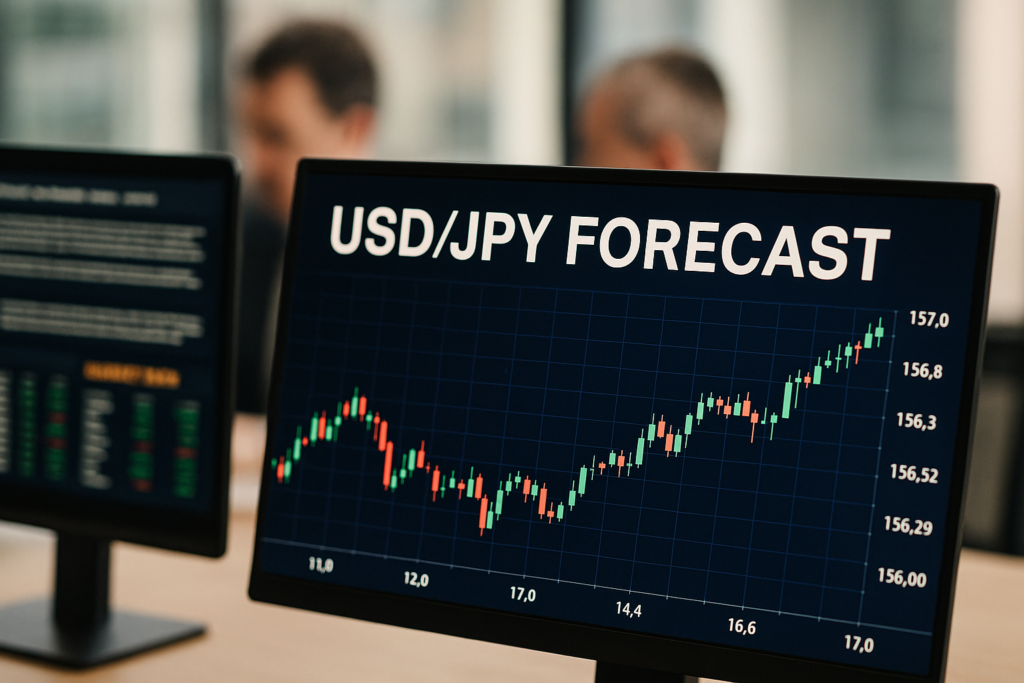
USDJPY, one of the most actively traded currency pairs, has shown sharp swings as traders respond to yen weakness and rising US Treasury yields. These developments are contributing significantly to overall forex market volatility. The yen’s sensitivity to global risk conditions and monetary divergence amplifies market reactions, making USDJPY a central focus for traders monitoring volatility trends.
The pound and the euro have also shown heightened sensitivity to news flow. Even modest headlines related to energy prices, inflation expectations or economic sentiment have triggered outsized moves. This pattern has reinforced the perception that forex market volatility is becoming more reactive and increasingly driven by macroeconomic headlines rather than long term fundamentals.
How Commodity Prices Are Feeding Forex Market Volatility
Energy and commodity markets have always played a significant role in shaping currency behaviour, and this influence is particularly strong now. Oil prices have fluctuated sharply due to uncertainty around global supply, production agreements and demand expectations. These fluctuations affect oil dependent economies, especially Canada, Norway and several emerging markets. As oil prices shift rapidly, forex market volatility increases across related currencies.
Gold prices have also moved sharply as investors reposition portfolios. Gold tends to rise when risk aversion climbs, and this inverse relationship with the dollar adds to the unpredictable nature of forex movements. During periods of heightened forex market volatility, gold often attracts safe haven flows that influence market sentiment.
Emerging Markets Feel the Pressure of Forex Market Volatility
Emerging market currencies are particularly vulnerable during periods of elevated forex market volatility. When global risk appetite weakens, investors often reduce exposure to emerging economies in favour of more stable assets. This leads to rapid depreciation and wider trading ranges for currencies such as the South African rand, Brazilian real and Turkish lira.
Capital flight from emerging markets accelerates forex market volatility further. As foreign investors withdraw capital, local currencies weaken, and central banks are often forced to intervene. These interventions may stabilise markets temporarily, but can also introduce additional uncertainty, reinforcing the continuous cycle of forex market volatility.
Institutional Traders Adjust Strategies To Navigate Forex Market Volatility
Large funds and institutional investors are reacting to current volatility by adjusting risk models and widening trading margins. Many institutions have shifted to shorter time frames for executing trades, reducing overnight exposure and increasing reliance on automated systems designed to react quickly during swings. When forex market volatility rises, these systems play an even more critical role in maintaining liquidity and managing risk.
Hedge funds have increased activity in volatility based strategies, taking advantage of rapid price movements. These strategies include momentum trading, volatility arbitrage and implied volatility hedging. The increased use of these tactics contributes to larger intraday swings, feeding into the broader cycle of forex market volatility.
Retail Traders Face Challenges During Strong Forex Market Volatility
Retail traders often struggle during periods of elevated volatility. Wide spreads, rapid price swings and increased slippage can lead to unexpected losses. However, experienced traders also recognise these periods as opportunities. Forex market volatility creates favourable conditions for short term strategies that rely on momentum and breakout setups.
Risk management becomes more important than ever. Retail traders are increasing use of stop loss placements, reducing position sizes and avoiding over leveraged positions to remain resilient during heightened forex market volatility. Education platforms and brokers have reported increased interest in training resources as retail traders seek to understand how to operate effectively in volatile markets.
Central Bank Communication Becomes a Core Driver of Forex Market Volatility
The influence of central banks on forex market volatility has grown significantly in recent years. Even small adjustments in forward guidance can trigger major movements across currency pairs. Market participants now monitor not only official policy decisions but also the tone, language and emphasis of central bank messaging.
If the Federal Reserve, ECB or BOE introduce even modest changes to their outlook, forex market volatility could spike instantly. Traders also listen closely to comments from central bank officials in the days following policy meetings. These comments can overturn previous assumptions and produce abrupt swings in markets.
Technical Factors That Amplify Forex Market Volatility
Technical traders have pointed out several chart based triggers that are intensifying forex market volatility. Breaks below major support levels or above long term resistance zones create cascading movements driven by stop loss activations. When volatility is high, these breakouts produce even larger moves, contributing to the cycle of broad instability.
Indicators such as the average true range and Bollinger Bands show wide expansions across most major currency pairs. This expansion confirms that forex market volatility is not isolated to specific regions or currencies but is widespread across global trading activity.
How Forex Market Volatility Impacts Global Businesses
Beyond trading desks, corporates are also affected by rising forex market volatility. Companies engaged in international business face increased uncertainty when planning cross border transactions. Importers and exporters must adjust hedging strategies to account for the possibility of unexpected price swings. Firms with exposure to multiple currencies may need to revise revenue forecasts, adjust pricing models or modify supply chain arrangements to protect margins.
Some companies rely on forward contracts and options to stabilise future cash flows. During periods of elevated forex market volatility, these instruments become more expensive, increasing operational costs. This environment pressures corporate finance teams to improve forecasting accuracy and risk management techniques.
Outlook: Will Forex Market Volatility Ease Anytime Soon
Analysts remain divided on whether forex market volatility will decrease in the short term. Several factors suggest that volatility may remain elevated. Economic uncertainty remains high. Geopolitical risks are rising. Energy markets are unstable. Inflation trends are inconsistent. All of these forces contribute to continued forex market volatility.
If central banks deliver policy decisions that surprise the market, volatility may intensify. On the other hand, if policy statements align closely with expectations, markets may stabilise, allowing forex market volatility to ease gradually. Traders believe the coming days will be crucial in determining the path forward.
Forex market volatility has become the defining feature of global currency trading this week. Driven by central bank uncertainty, shifting economic conditions, fluctuating commodity prices and changing investor sentiment, the rise in volatility is reshaping how institutions, corporations and retail traders approach the market. As central banks prepare to deliver critical decisions, forex market volatility is likely to remain elevated, making risk management and strategic planning essential for navigating this unpredictable environment.


