

Halal forex broker refers to a forex provider that offers trading conditions structured to comply with Sharia principles, typically through swap-free or “Islamic” trading accounts that remove overnight interest. This guide explains what makes forex trading halal or haram under Sharia law, how Islamic trading accounts work, and which brokers are most relevant in 2025 for Muslim traders seeking compliant options. Many traders ask “is forex halal 2025?” the short answer is: it can be when trades avoid riba, excessive uncertainty, and gambling, and when account mechanics respect Islamic finance principles. This article delivers up-to-date reviews and comparisons of brokers referenced in recent market reports, clear selection criteria for choosing a halal forex broker, practical steps to open and verify an Islamic account, and trading strategies that align with swap-free limits. Read on for definitions, EAV comparison tables, fee mechanics, selection checklists, strategy guidance, and step-by-step activation advice for Islamic trading accounts.

Halal forex trading means participating in currency markets under conditions that avoid riba (interest), gharar (excessive uncertainty), and maisir (gambling), typically implemented through swap-free or Islamic trading accounts. The mechanism relies on removing overnight interest charges and ensuring transactions are spot-based and clearly documented to reduce uncertainty; the primary benefit is enabling Muslims to trade currencies without violating core Sharia prohibitions. Understanding these foundations helps traders evaluate broker promises and account mechanics accurately. The next subsection defines the three central Sharia principles that determine halal trading and provides concrete forex-related examples to illustrate each prohibition.
Riba (interest) refers to any guaranteed interest on loans and is central to why standard overnight swap charges are problematic; in forex, riba typically appears as rollover interest. Gharar denotes excessive uncertainty or ambiguous contract terms, which can occur in highly speculative derivative structures or poorly defined settlement conditions. Maisir, or gambling, captures outcomes decided by chance rather than informed analysis; highly leveraged, speculative betting on price moves without economic rationale can resemble maisir. These three principles together create a practical rule-set: avoid interest-bearing positions, prefer transparent spot transactions where ownership changes hands, and apply disciplined analysis to avoid gambling-like behavior. This framework sets up the need for account-level solutions — namely, swap-free mechanics — which are described next.
This research critically examines the compliance of online Islamic Forex trading with Islamic principles, focusing on swap-free accounts.
Islamic Forex Trading: An Examination of Swap-Free Accounts for Muslim Traders
A Forex brokerage offering an “Islamic” Forex account that waives overnight interest. These swap-free accounts are structured to enable trading in accordance with Islamic jurisprudence. Consequently, numerous Forex brokers have introduced these accounts to address the increasing demand from Muslim traders.
Critical evaluation of the compliance of online Islamic FOREX trading with Islamic principles, RF Omar, 2015
An Islamic trading account typically ensures halal trading by removing automatic overnight swap charges and replacing them with alternative, Sharia-compliant mechanisms such as administrative fees or spread adjustments, and by enforcing settlement rules that mimic spot ownership. Brokers may offer swap-free status upon request or automatically for certain account types, and they usually document the change in account terms to reduce gharar. The specific benefit is practical: traders can hold positions overnight without incurring conventional interest, provided the broker’s alternative charges are transparent and acceptable under the trader’s interpretation of Sharia law. Understanding these mechanics allows traders to evaluate whether an account truly aligns with their compliance standards, and this evaluation leads naturally to comparing actual providers in the market.
This section examines brokers commonly referenced in 2025 market summaries that offer Islamic or swap-free options, comparing regulatory coverage, account availability, platform support, and overall suitability for halal traders. The goal is to present a compact EAV-style comparison for quick scanning and to follow with short review blocks that note strengths and typical user profiles. Traders should use the table to identify providers to research further, then read the concise reviews to match a broker to their regulatory preferences and trading platform needs. The following table highlights brokers and core attributes highlighted in recent reports.
Introductory note: the regulator and platform landscape varies by broker entity and jurisdiction; values shown reflect commonly referenced coverage and typical platform support rather than exhaustive corporate detail.
| Broker | Regulatory Coverage | Islamic Account Available | Typical Platforms |
|---|---|---|---|
| FP Markets | ASIC / CySEC / VFSC (varies by entity) | Swap-free / Islamic option offered | MT4, MT5 |
| FxPro | FCA / CySEC / FSCA (varies by entity) | Islamic accounts available on request | MT4, MT5, cTrader |
| IC Markets | ASIC / CySEC / FCA (varies by entity) | Swap-free account available | MT4, MT5, cTrader |
This comparison clarifies that multiple well-known brokers provide Islamic or swap-free options and support mainstream platforms; traders should verify the specific entity and license that applies to their country. The following review paragraphs summarize what makes FP Markets notable and compare FxPro and IC Markets’ Islamic account implementations.
FP Markets is frequently cited in market roundups for its broad platform support and for offering swap-free account options to eligible clients, which suits traders prioritizing platform flexibility under Islamic conditions. Its regulatory footprint across multiple jurisdictions provides a level of oversight that matters to traders seeking clear fund protections and transparent disclosures. The account mechanics often include formal swap-free settings with alternative charging models applied only under documented terms, which helps reduce gharar for compliance-minded traders. For traders who value MetaTrader compatibility and institutional-style liquidity, FP Markets is worth deeper review; next we compare how FxPro and IC Markets structure their Islamic offerings to highlight differences.
FxPro and IC Markets both appear in industry summaries as providers that support Islamic trading accounts, but they differ slightly in typical platform emphasis and routing. FxPro is noted for support across MT4, MT5, and cTrader, giving traders a range of execution environments, while IC Markets is commonly associated with ultra-low-latency MT4/MT5 execution favored by active traders. Both brokers generally apply swap-free status on request and use alternative commercial mechanisms — such as administrative fees or marginal spread adjustments — to offset overnight exposure. Traders should weigh whether a broker’s execution model, platform choice, and regulatory entity align with their personal compliance interpretation and trading style; the selection process is detailed in the following section.
Choosing a halal forex broker requires balancing Sharia compliance mechanisms with regulatory safety, trading costs, and platform suitability. The primary criteria include the broker’s regulatory licenses, clarity around swap-free mechanics, transparency of alternative charges, platform availability (MT4/MT5/cTrader), and asset screening policies that address restricted instruments. Use the checklist below to prioritize what matters most for your trading plan, then consult the short EAV table that maps each criterion to why it matters and practical checklist items.
These criteria help narrow options quickly; the next table maps each selection criterion to its practical importance.
| Selection Criterion | Why It Matters | Practical Checklist Item |
|---|---|---|
| Regulatory License | Protects client funds and enforces disclosures | Verify license number and entity jurisdiction |
| Swap-Free Terms | Ensures removal of riba-like charges | Request written swap-free policy and fee schedule |
| Platforms Supported | Determines strategy compatibility | Confirm MT4/MT5/cTrader availability for execution needs |
| Fee Transparency | Prevents hidden costs that recreate riba | Compare spread/commission adjustments and admin fees |
Regulation matters because it governs client fund segregation, dispute resolution, and reporting standards — all of which reduce gharar and protect traders from opaque practices that could undermine halal intent. Top-tier regulators like FCA, ASIC, and CySEC are frequently referenced in industry summaries as markers of stronger oversight, while other regulators may offer different levels of protection. Red flags include unregulated entities, poor disclosure of fees, and unclear jurisdictional identity for the account-holding entity. Evaluating regulatory standing helps you choose brokers whose corporate structure and reporting reduce legal ambiguity, which in turn supports the ethical clarity required for Sharia-compliant trading.
When assessing fees, distinguish between traditional swap charges and the alternative models brokers use for swap-free accounts: administrative fees, spread mark-ups, or fixed weekend charges are common alternatives that can materially affect trading cost. Consider typical account features such as minimum deposit, commission structure, grace periods for swaps, and whether overnight positions trigger extra charges on certain instruments. The practical benefit of a detailed fee comparison is selecting an account that preserves halal intent without imposing excessive cost that undermines trading performance. After reviewing fees, the next section explains swap-free mechanics in depth so you can calculate real trade costs.
This research delves into the Sharia compliance of online forex trading, highlighting challenges and the emergence of swap-free accounts as a solution.
Sharia Compliance in Online Forex Trading: Challenges and Swap-Free Alternatives
This research investigates the Sharia compliance of online forex trading activities, identifies pertinent challenges, and suggests resolutions. The findings suggest that while forex trading presents complexities from an Islamic finance perspective, mechanisms such as swap-free accounts are emerging to facilitate Sharia-compliant online forex trading.
Analisis Syariah Terhadap Praktik Trading Forex Online: Identifikasi Masalah Dan Solusi, Z Assyifa, 2024
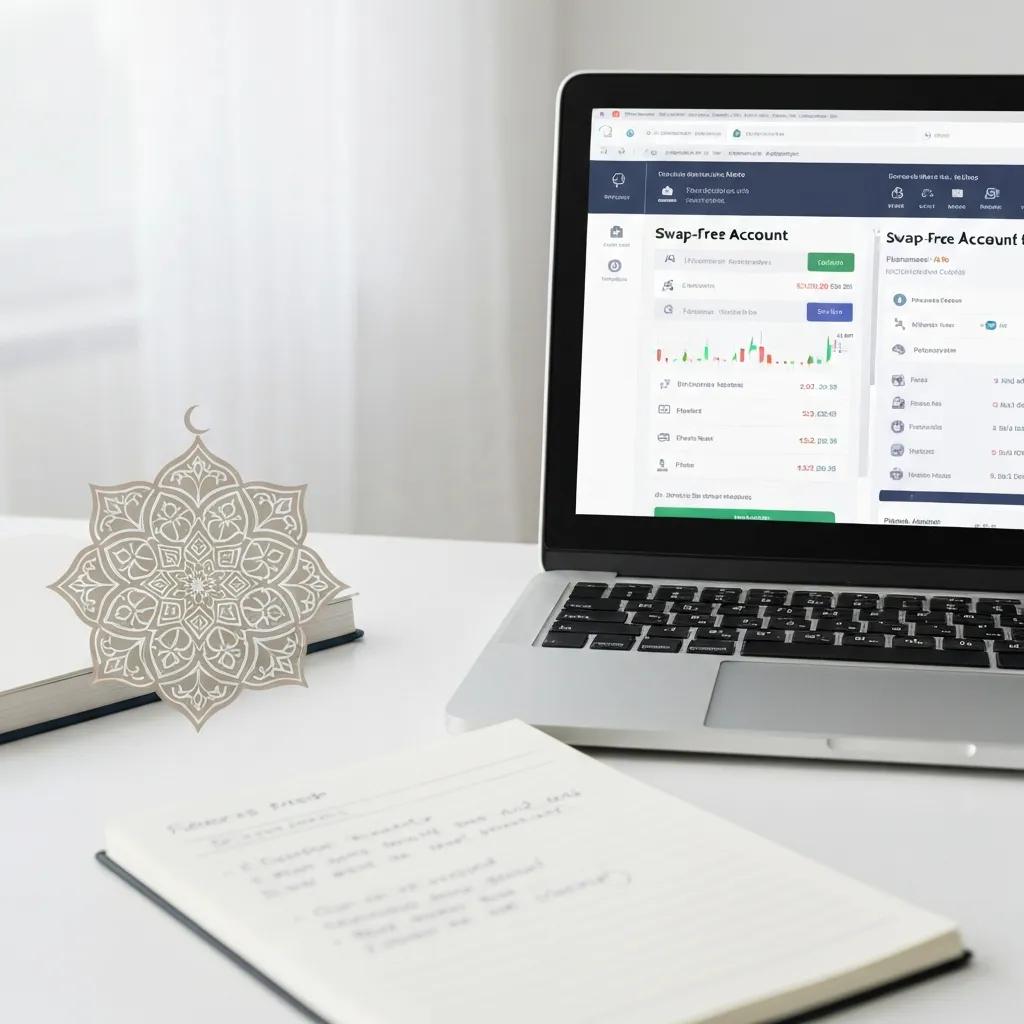
Islamic account features aim to remove overnight interest while keeping brokerage commercially viable; common approaches include waiving swap interest and implementing administrative fees, spread mark-ups, or commission adjustments. The mechanism works by replacing the prohibited interest element with a documented, transparent charge that does not resemble a loan interest payment, and by enforcing settlement rules that mirror spot trading to reduce gharar. The following table explains core account features, how they work, and example values or descriptions that traders should request from brokers.
Introductory note: examples below describe common models brokers use in swap-free accounts; confirm exact terms with a broker before trading.
| Account Feature | How It Works | What to Ask the Broker |
|---|---|---|
| Swap-Free Option | Broker removes overnight interest and applies alternative charge | Ask for written policy and scenarios showing applied charges |
| Administrative Fee | Fixed or tiered fee replacing swap income | Request fee schedule and calculation examples |
| Spread Mark-Up | Wider spread substitutes overnight income | Compare live spreads with and without swap-free status |
Swap-free accounts remove the automatic rollover interest that typically accrues when positions are held past the market close. To remain commercially sustainable, brokers commonly offset the lost swap income by charging an administrative fee, widening the spread, or adding a small commission; each method changes the economics of trades differently. For example, an administrative fee might be charged per overnight position, while a spread mark-up increases trading cost on every trade; the trader benefits by avoiding direct interest but must evaluate the net cost. Transparency is the key: traders should request concrete trade cost examples from brokers to calculate the break-even point and ensure the alternative model does not recreate riba in effect. Understanding these mechanics informs strategy adjustments that follow.
Islamic trading often excludes or restricts certain asset classes and instruments that conflict with Sharia principles, such as interest-bearing bonds and certain complex derivatives that introduce excessive gharar or maisir. The spot forex market is generally considered more acceptable when transactions are settled promptly and ownership transfers are clear, while CFDs and synthetic derivatives may require careful scrutiny depending on contract terms. Crypto remains debated among scholars due to volatility and unclear intrinsic value, so many traders seek platforms that allow selective asset screening. Traders should identify restricted instruments aligned with their own Sharia interpretation and confirm broker policies on asset availability and screening.
Halal trading strategies aim to minimize exposure to overnight fees and speculative behavior while preserving disciplined risk controls. Effective approaches include favoring intraday and short-term trades to avoid administrative overnight charges, using defined stop-losses to limit exposure (reducing gharar), and employing conservative leverage to prevent maisir-like outcomes. Risk management techniques such as position-sizing rules, diversification across currency pairs, and strict capital allocation support both religious compliance and financial prudence. The guidance below gives practical adjustments traders can make to align their strategies with swap-free constraints.
Key strategy adjustments for swap-free accounts:
To align strategies, intraday traders can exploit the lack of overnight swaps by closing positions before server rollovers, thereby avoiding admin fees, while swing traders must factor alternative charges into their expected returns and perhaps reduce position sizes accordingly. Scalpers should confirm that spread mark-ups do not erode thin profit margins, and position traders should seek transparent examples of cumulative overnight charges to inform holding-cost calculations. Use scenario testing on small trades to measure actual cost impact, then scale strategies that remain profitable after swap-free adjustments. These tactical steps reduce unexpected costs and preserve halal intent while maintaining viable trading performance.
Leverage itself is debated among scholars: some argue leverage can be permissible if it does not introduce guaranteed interest or excessive uncertainty, while others caution against leverage that effectively creates speculative risk akin to maisir. Practically, conservative measures—low leverage caps, strict stop-loss placement, and full awareness of margin call mechanics—mitigate gharar and reduce gambling-like behavior. Traders who choose to use leverage should document risk controls, limit exposure to small percentages of capital per trade, and prefer brokers with clear margin call and liquidation policies that minimize opaque outcomes. This balanced approach aligns theological nuance with practical risk management for responsible halal trading.
This analysis examines the specific features of Islamic Forex accounts, particularly swap-free options, and their alignment with Sharia compliance principles.
Islamic Forex Accounts: An Analysis of Swap-Free Features and Sharia Compliance
Forex trading is a form of currency exchange involving the trading of one currency for another, capitalizing on fluctuations in exchange rates at specific times. However, significant concerns exist regarding the compliance of forex trading with Sharia law. Amidst these concerns, PT Finex Bisnis Solusi Futures has introduced the Islamic Account feature, specifically designed to eliminate overnight fees (interest), commonly referred to as Swap-free.
Analisis Fitur Swap free (Akun Islami) pada Platform Trading forex PT. Finex Bisnis Solusi Futures (Finex) Perspektif Fatwa DSN-MUI No. 28/DSN-MUI/III/2002 tentang …, 2002
Opening an Islamic or swap-free account follows the broker’s standard account opening process with additional steps to request and verify swap-free status; the main benefit is formalizing compliance preferences within your trading account’s terms. Typically, you create an account, complete KYC checks, request Islamic status via account settings or support ticket, and receive written confirmation of the swap-free terms and any alternative charges. The numbered steps below outline a practical activation workflow and help ensure there are no surprises in post-activation trade costs.
This process helps traders confirm compliance before placing significant capital at risk, and next we list typical documents brokers request and privacy considerations.
Most brokers require standard KYC documentation — government-issued photo ID, proof of address, and proof of funding — while a few may request a short declaration or questionnaire to confirm eligibility for an Islamic account. The practical reason is administrative: brokers must verify identity and residency for regulatory compliance and then match the swap-free product to the correct account entity. Privacy and data protection are important, so confirm the broker’s data handling and storage policies when providing documentation. After preparing documents, the final subsection explains how to apply and verify swap-free activation.
To activate swap-free status, submit your request through the broker’s official support channel or account settings, include required account identifiers, and ask for written confirmation that details any alternative charges and effective dates. Typical activation timelines vary by broker entity, but traders should expect to verify the account and then test with a small overnight position to ensure swaps are not applied. If a swap still appears, escalate via support and request a documented correction; maintaining clear records of correspondence reduces ambiguity and gharar. Following these activation checks completes the practical pathway to trading under a documented Islamic account.
Different sections of this guide have highlighted regulatory priorities, swap-free account mechanics, broker comparison data, selection checklists, and practical activation steps to help traders identify the best halal forex broker 2025 for their needs. Use the EAV tables and checklists above to narrow options and always verify specific entity licensing and charge schedules directly with the broker before funding live accounts. This approach ensures both compliance with Islamic principles and sound trading practice in the current market environment.


