What Is a Signal Provider Account and How Does It Work?
Most traders believe their income is limited by their capital. The more you have, the more you can make. It is a logical assumption, and for decades it was largely true. But the modern trading landscape has quietly dismantled that assumption. Today, the biggest earning opportunity available to a skilled trader is not deploying more capital. It is monetising the skill itself. And the most direct, accessible, and scalable mechanism for doing exactly that is a signal provider account.Whether you are a seasoned forex trader with years of verified performance behind you, or an intermediate trader who has finally found a consistent edge, understanding what a signal provider account is and how it works could be the single most important step you take toward building a sustainable income from your trading expertiseasd.Signal Provider Account
Why the Trading Income Model Has Changed
For most of financial history, there were only two ways to earn money from trading skill. You either managed other people’s money through a regulated fund structure, which required significant capital, legal infrastructure, and institutional backing, or you traded your own account and kept every pound of profit for yourself. Neither route was particularly accessible to the average retail trader.The rise of social trading platforms over the past decade has created an entirely new income model, one that sits between these two extremes. It allows skilled traders to earn money from trading skill without managing a fund, without regulatory headaches, and without requiring followers to hand over direct control of their capital. At the centre of this model sits the signal provider account.A signal provider account is, in essence, the modern retail trader’s answer to the question: how do I get paid for what I know, not just for what I risk?
Defining a Signal Provider Account
A signal provider account is a specialised trading account that has been registered, verified, and made publicly accessible on a social or copy trading platform. Unlike a standard retail trading account, which is entirely private, a signal provider account operates with a defined level of transparency. Its trading history, performance metrics, drawdown statistics, and risk profile are visible to potential followers on the platform.When a trader opens a signal provider account, they agree to have their trading activity monitored, broadcast, and made available for replication by other users. Every trade executed through the signal provider account, whether a long position on EUR/USD or a short on crude oil, is recorded in real time and made accessible to followers who choose to mirror it.The critical distinction between a signal provider account and a simple alert service is automation. A signal provider account does not merely publish trade recommendations. It enables automatic replication. When the provider executes a trade, that trade is mirrored across all connected follower accounts simultaneously, in full or in a proportional size determined by each follower’s own risk settings.This automation is what transforms a signal provider account from a passive information tool into an active income-generating asset.How a Signal Provider Account Generates IncomeBefore exploring the mechanics in detail, it is worth being direct about the earning potential. A signal provider account generates income through two primary models, depending on the platform.The first is a subscription or per-follower fee, where the platform pays the signal provider a fixed amount for each active follower connected to their account. The second is a performance fee model, where the provider earns a percentage of the profits generated across follower accounts. Some platforms combine both. In either case, the more followers a signal provider account attracts, and the better it performs, the greater the income it generates.This is where a signal provider account becomes one of the most compelling ways to earn money from trading skill available to retail traders today. Unlike trading a personal account, where income is capped by the size of your own capital, a signal provider account creates a scalable income stream. A trader managing their own 10,000-pound account earns only from their own positions. A trader running a signal provider account with 500 followers effectively leverages their skill across a much larger pool of capital, earning a proportional reward without bearing the full risk of that capital themselves.
How a Signal Provider Account Works in Practice
The technical process behind a signal provider account is more straightforward than many traders initially assume. Here is how it typically unfolds from start to income.
Registration and verification
A trader wishing to open a signal provider account must first register with a compatible platform. This usually involves linking an existing brokerage account to the social trading network, or opening a new account directly through the platform. The trader agrees to terms governing transparency, data sharing, and performance reporting. In most cases, the setup process takes no more than a few minutes.
Building a live track record
Once the signal provider account is registered, it begins accumulating a live trading history. This phase is the foundation of everything that follows. Platforms display performance data including total return, monthly gain, maximum drawdown, win rate, and follower count. A strong, consistent, and verifiable track record is the primary factor that attracts followers to a signal provider account.It is worth emphasising that live performance carries enormously more weight than backtested or hypothetical results. Sophisticated followers and platform ranking algorithms alike prioritise signal provider accounts with real-money, real-time performance over sustained periods.
Followers connect and replicate
As the signal provider account builds visibility on the platform, followers begin connecting their own accounts. Each follower specifies their risk parameters, including capital allocation and maximum drawdown tolerance. From that point, every trade executed by the signal provider is automatically replicated in the follower’s account without any manual input required.
Income grows with performance and follower count
As the signal provider account continues to perform and attract followers, the income generated scales accordingly. A provider earning a modest fee per follower across hundreds of connected accounts can generate a meaningful monthly income entirely independent of the size of their personal trading capital. This scalability is precisely what makes a signal provider account one of the most efficient ways to earn money from trading skill in today’s market.
The Transparency That Makes It Work
One of the defining characteristics of a signal provider account is the transparency it imposes on the trading process. In traditional finance, fund manager performance is often opaque, accessible only to institutional clients through carefully curated quarterly reports. A signal provider account, by contrast, exposes every trade, every loss, and every period of underperformance to public scrutiny in real time.For followers, this transparency enables genuinely informed decision-making. Rather than trusting a fund manager’s reputation or a broker’s recommendation, a follower can examine months or years of verified trading data before committing a single pound. They can evaluate consistency, assess how the signal provider account performed during volatile market conditions, and compare multiple providers side by side.For the signal provider themselves, this transparency creates a powerful professional discipline. Traders who know their every move is visible to hundreds of followers tend to be more measured in their risk-taking, more consistent in their approach, and more committed to the strategy they have publicly stated. The signal provider account, in this sense, functions as a form of accountability that sharpens trading discipline in ways that private trading rarely does.This combination of transparency and accountability is not just good for followers. It is good for the provider’s long-term income. Signal providers who maintain consistent, low-drawdown performance retain followers for longer, attract new ones more easily, and build a reputation that compounds over time, much like a brand.Signal providers
The Metrics That Define a Strong Signal Provider Account
Not all signal provider accounts are created equal, and the platforms that host them make that clear through the performance data they display. Understanding these metrics is essential both for traders building a signal provider account and for followers evaluating one.Total return is the headline figure, the cumulative percentage gain since inception or over a defined period. It is the first number most followers look at, and the last one sophisticated followers rely on in isolation.Maximum drawdown is arguably the most important risk metric associated with any signal provider account. It measures the largest peak-to-trough decline in account equity during a given period. A provider showing spectacular returns alongside a 60% or 70% maximum drawdown is taking a level of risk that most followers would find unacceptable once they understand it. The most attractive signal provider accounts tend to combine solid returns with tightly controlled drawdown figures.Win rate measures the percentage of trades closed in profit. A high win rate is not inherently a sign of a strong signal provider account. A provider winning 85% of trades but allowing losses to run far beyond winners can still be broadly unprofitable over time. Win rate must always be assessed alongside the average risk-to-reward ratio.Risk-adjusted return, expressed through metrics such as the Sharpe ratio or Profit Factor, gives a more complete picture of a signal provider account’s quality. These metrics account for the level of risk taken in generating returns, enabling meaningful comparison across providers with very different styles.Consistency is perhaps the hardest metric to quantify but the most commercially valuable to maintain. A signal provider account that generates steady, moderate returns month after month is worth far more to followers, and therefore far more as an income source, than one that alternates between explosive gains and punishing drawdowns.
The Platforms That Host Signal Provider Accounts
The ecosystem supporting the signal provider account has grown substantially, with several major platforms now competing for the attention of both providers and followers.ZuluTrade is among the longest-established social trading networks, supporting signal provider accounts across forex, commodities, and indices. Its ranking algorithm rewards consistency and penalises excessive risk, creating a meritocratic environment that favours skilled, disciplined providers.Myfxbook Autotrade connects signal provider accounts to a large community of analytically minded followers via the widely trusted Myfxbook performance tracking platform. Because Myfxbook already has credibility as an independent analytics tool, its Autotrade service attracts followers who take performance data seriously.NAGA combines social trading with a broader retail investment platform, allowing signal provider accounts to reach a wider audience beyond dedicated forex traders.Proprietary brokerage platforms are increasingly building signal provider account functionality directly into their client interfaces, allowing traders to become providers and attract followers without leaving their existing broker.The choice of platform has a direct impact on income potential. Different platforms offer different fee structures, different follower demographics, and different levels of algorithmic promotion for high-performing accounts. Selecting the right platform for your trading style is an integral part of building a profitable signal provider account.
Common Misconceptions That Cost Traders Income
Despite their growing popularity, signal provider accounts are frequently misunderstood in ways that prevent traders from either building them effectively or using them wisely.A signal provider account is not a passive income machine from day one. The income generated is directly tied to performance and follower count, both of which take time to build. Traders who open a signal provider account expecting immediate returns without a substantial track record will almost always be disappointed.A large follower base does not guarantee large income. Follower retention depends entirely on ongoing performance. A period of significant drawdown will cause followers to disconnect, which reduces income rapidly. The most durable signal provider accounts are built on consistent performance, not viral momentum.A signal provider account does not require technical or coding skills. The vast majority of platforms are designed for retail traders with no programming background. Connecting a brokerage account to a social trading network is typically a straightforward process completed in minutes.Operating a signal provider account does not automatically make you a regulated investment adviser. Most reputable platforms position providers as autonomous traders whose activity is made available for replication, rather than as advisers. However, traders earning significant income through performance fees at scale are advised to seek appropriate legal guidance for their jurisdiction.
The Psychology Behind a Successful Signal Provider Account
There is a dimension to running a signal provider account that most trading guides overlook entirely, and it is the one that separates providers who last from those who flame out within a few months. That dimension is psychology.Trading a private account is a largely solitary activity. Your wins and losses are your own business. Your drawdowns are uncomfortable but private. Your recovery periods are invisible to the outside world. A signal provider account changes all of that. Every loss is public. Every drawdown is visible to potentially hundreds of followers who are watching their own capital fluctuate in real time. The psychological pressure this creates is qualitatively different from anything a private trader typically experiences.Successful signal providers learn to manage this pressure without allowing it to distort their decision-making. The most common failure mode is what experienced traders call performance anxiety trading, where a provider begins taking larger risks or deviating from their stated strategy in an attempt to recover losses quickly and reassure followers. This behaviour almost always makes the situation worse. Followers are not reassured by desperate recovery trades. They are reassured by calm, methodical adherence to a proven process, even when that process temporarily produces negative results.The signal providers who build lasting, income-generating accounts are those who understand that their job is not to deliver spectacular performance in any given month. Their job is to execute their strategy with discipline and consistency across all market conditions, communicating openly with their follower base when conditions are difficult, and letting the long-term track record speak for itself.This psychological maturity is not something that can be faked or shortcut. It is developed through experience, through surviving drawdowns in private trading before ever opening a signal provider account to public scrutiny, and through a genuine commitment to the process over the outcome.
The Role of Risk Management in a Signal Provider Account
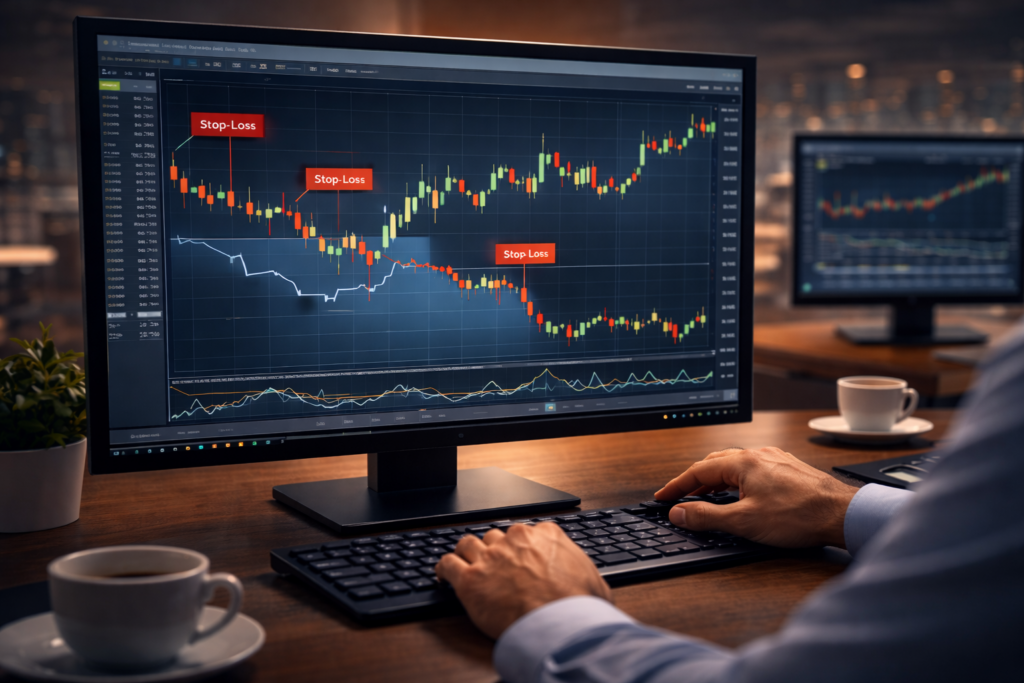
No discussion of a signal provider account is complete without a serious examination of risk management, not just because it protects the provider’s own capital, but because it is the single most important factor in follower retention and therefore in long-term income.Followers connect to a signal provider account with a set of expectations based on the historical performance data they reviewed before joining. If the account’s maximum drawdown has historically been 8%, a follower who connects with a 10,000-pound allocation is implicitly accepting a potential loss of around 800 pounds in a worst-case scenario. If the signal provider account then experiences a 25% drawdown because the provider deviated from their usual risk parameters, that follower will disconnect, possibly permanently, and is unlikely to recommend the account to others.Position sizing is therefore not merely a technical detail for a signal provider. It is a contractual obligation to the follower base. The most respected and commercially successful signal provider accounts maintain extraordinarily consistent position sizing across all market conditions. They do not double their lot sizes after a losing streak to recover faster. They do not increase risk during high-conviction trades beyond their stated parameters. They treat every trade as a representative sample of the strategy they have publicly committed to delivering.Stop loss discipline is equally non-negotiable. A signal provider account that runs positions without stop losses, or that moves stop losses further from entry to avoid being stopped out, is not just taking excessive risk. It is misrepresenting the nature of the strategy to followers who connected based on a specific risk profile. This kind of behaviour is the fastest route to a collapsing follower base and a destroyed reputation.The providers who earn the most from their signal provider accounts over the long term are, almost without exception, the ones who treat risk management as the foundation of their service rather than a constraint on their performance.
Scaling Your Signal Provider Account Into a Serious Income Stream
Once a signal provider account has established a consistent track record of six months or more, the focus shifts from building credibility to scaling income. This is where the unique economics of the model become genuinely compelling.A trader running a personal 20,000-pound account with a 30% annual return earns 6,000 pounds from their trading. The same trader, running a signal provider account with 300 followers each allocating an average of 5,000 pounds, and earning a 20% performance fee on those followers’ profits, earns dramatically more from the same trading activity without risking a single additional pound of personal capital.Scaling a signal provider account requires active attention to platform visibility. Most social trading platforms use ranking algorithms that weight recent performance, consistency, follower count, and risk metrics. Providers who understand these algorithms and optimise for them, by maintaining low drawdown figures, trading regularly enough to demonstrate activity, and keeping follower retention rates high, will find their accounts surfaced more prominently to potential new followers.Building a presence beyond the platform itself accelerates this process significantly. Signal providers who share verified performance data on social media, contribute to trading communities, and maintain a consistent public profile attract followers from outside the platform’s organic discovery system. Over time, a well-managed signal provider account supported by a modest external presence can grow into a business that generates consistent monthly income entirely from the provider’s existing trading activity.
How to Start Earning with a Signal Provider Account Today
The path from skilled trader to earning signal provider is more accessible than most people realise. The steps are straightforward, even if the discipline required to execute them consistently is not.Begin by selecting a platform that aligns with your trading style and target audience. Research the fee structures, follower demographics, and ranking algorithms of the major social trading networks before committing. Open your signal provider account and link it to a live brokerage account with real capital. Begin trading your strategy exactly as you would in private, with full awareness that every position is now part of your public record.Resist the temptation to optimise for optics in the early months. The traders who build the most successful signal provider accounts are those who trade their genuine edge consistently, not those who take outsized risks to generate impressive-looking short-term numbers. Followers who matter, the ones who stay connected for months and generate sustained income, are looking for reliability, not fireworks.Document your strategy. Communicate openly with your follower base during difficult periods. Treat your signal provider account as a professional service, not a side project. The income will follow the performance, and the performance will follow the discipline.The modern financial markets offer skilled traders more ways to earn money from trading skill than at any point in history. A well-managed signal provider account is among the most powerful of them. If you are serious about turning your trading skill into a scalable income stream, the next step is simple. Start building your signal provider account today and let your performance speak for itself.
Frequently Asked Questions About Signal Provider Accounts
What is a signal provider account?
A signal provider account is a live trading account that has been registered on a social or copy trading platform and made publicly visible so that other traders can automatically replicate its trades. Unlike a standard brokerage account, a signal provider account exposes its full trading history, performance metrics, and risk statistics to potential followers, allowing them to make informed decisions before connecting their own capital.
How much can you earn from a signal provider account?
Earnings from a signal provider account vary significantly depending on the platform, the number of active followers, and the fee structure in place. Providers on performance fee models typically earn between 10% and 30% of the profits generated across follower accounts. A signal provider account with a few hundred followers and consistent monthly performance can generate a meaningful supplementary income, and at scale, a full-time one. There is no fixed ceiling, but income is always directly tied to trading consistency and follower retention.
Is a signal provider account safe?
Running a signal provider account carries the same market risks as any live trading account. The provider’s own capital is subject to the same losses as any trader. For followers, the risk is managed through platform safeguards including drawdown limits and automatic disconnection triggers. The safety of a signal provider account, both for the provider and for followers, is ultimately a function of the provider’s risk management discipline.
Can beginners become signal providers?
In principle, any trader can open a signal provider account. In practice, building a follower base requires a verified live track record of consistent performance, typically spanning at least three to six months at a minimum. Beginners who open a signal provider account before establishing that track record are unlikely to attract meaningful follower numbers. The most successful path is to trade privately, build a documented record of performance, and open a signal provider account once that record is strong enough to stand on its own merits.This article is for informational purposes only and does not constitute financial advice. Trading financial instruments carries a high level of risk and may not be suitable for all investors.
We sincerely apologize, but we are unable to determine your location and therefore
confirm whether you are located in a jurisdiction within our target market.
As a result, we are unable to provide access to this website or offer our services
at this time. Thank you for your understanding and support.