
Global financial markets are entering a period of renewed uncertainty, and cryptocurrency has once again found itself at the center of the storm. A rising wave of sell offs across digital assets has sparked concern among investors who fear the early signs of a new crypto winter. The shift follows intensified volatility across equities, commodities and foreign exchange markets, pushing traders into risk off positions and weakening appetite for speculative investments.
The downturn began subtly, with small corrections in Bitcoin and Ethereum after several weeks of sideways trading. Within days the declines intensified as global sentiment deteriorated. Sharp moves in equity markets, disruptions in bond yields, geopolitical uncertainty and repeated liquidity stress in regional banking systems have created an environment where traders are reducing exposure across all major risk assets, including cryptocurrencies.
Although digital assets have grown significantly since the last prolonged crypto winter of 2022, the market remains highly sensitive to macroeconomic volatility. Traders are watching closely as the combination of global economic tension and increasing sell pressure threatens to cool market enthusiasm.
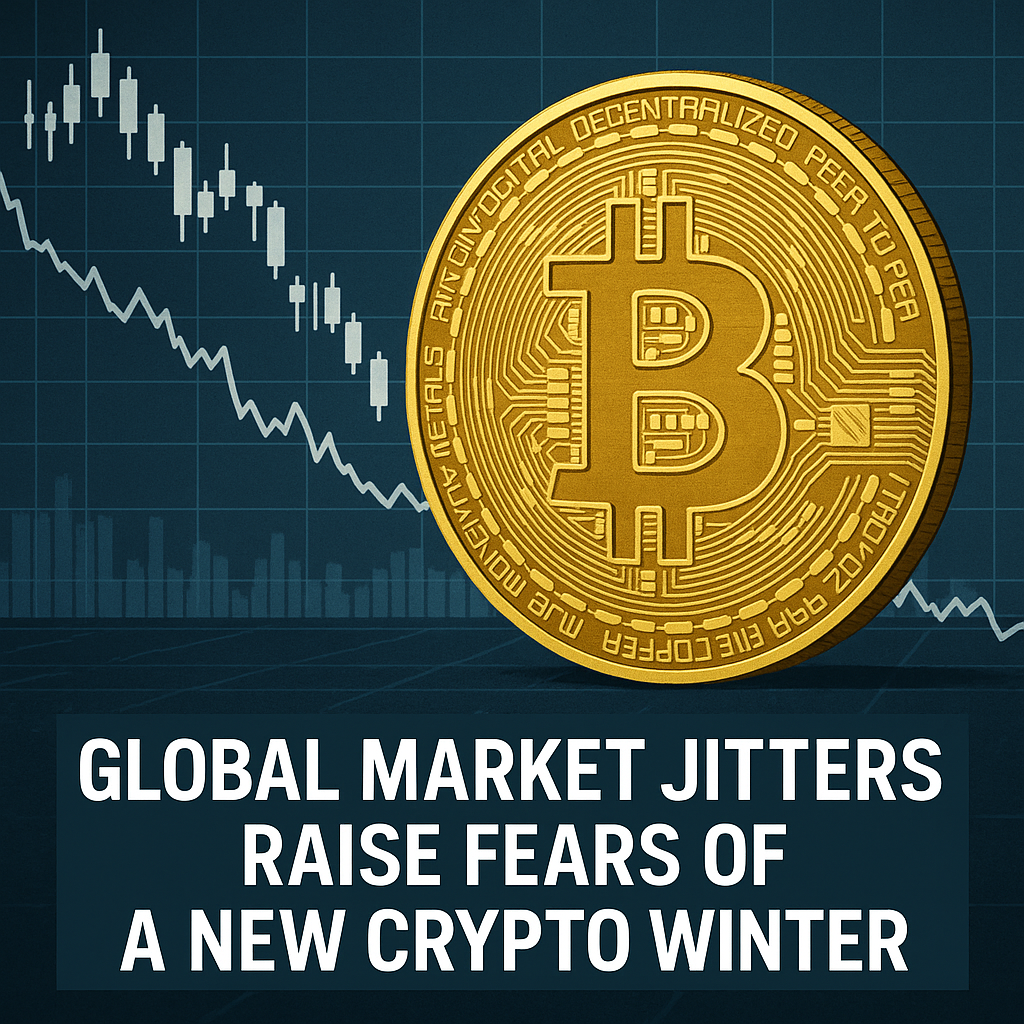
Data from centralised exchanges indicates a steep increase in sell orders across major trading pairs. Bitcoin has experienced larger than usual withdrawals from long term holder wallets while Ethereum has seen a contraction in staking inflows. The market is showing signs of stress as liquidity evaporates in several altcoin sectors.
One of the most concerning developments is the rise in forced liquidations. Leveraged traders are facing margin calls as prices fall, and this cascade effect has added downward pressure to already fragile market conditions. More than 900 million dollars in leveraged positions were liquidated in a 48 hour window. This level of capitulation is often associated with periods of extreme fear.
Institutional activity has also cooled. Hedge funds and asset managers that were previously building long positions have shifted to neutral or defensive strategies. Many professional traders are increasing cash holdings and reducing exposure to volatile assets until macro conditions stabilise.
The broader economic environment has become increasingly unstable. Concerns around weakening global growth, fluctuations in interest rate expectations and geopolitical tensions are weighing heavily on investor sentiment. In times of uncertainty, money traditionally flows into safe assets like government bonds, the US dollar and gold. Crypto, still viewed by many as a high risk investment, tends to suffer during such cycles.
Bond yields have risen sharply in major economies, creating headwinds for speculative assets. Higher yields increase the opportunity cost of holding risk assets and reduce liquidity across global financial markets. When credit conditions tighten, investors reassess risk and begin to reduce exposure to volatile sectors.
Inflation uncertainty remains another major concern. Although inflation has cooled from previous highs, several central banks have warned that renewed inflation pressures are still possible. This uncertainty creates tension in all risk markets and pushes investors to adopt more cautious strategies.
The growing anxiety has reminded investors of past downturns. Crypto winter is a term used to describe extended periods of falling prices, low liquidity and weak investor participation. The industry has experienced several winters since Bitcoin’s inception, with the most notable ones occurring in 2014, 2018 and 2022.
These periods were characterised by deep price declines, the collapse of major companies, reduced venture capital funding and widespread pessimism. Many fear that the current environment could evolve into something similar if macro conditions continue to deteriorate.
However, there are also notable differences between the current market and previous cycles. Today’s crypto industry is far more developed, with regulated products, institutional custody services, broader adoption and stronger on chain utility. This foundation may help prevent a severe multi year freeze, although a prolonged correction is still possible.
Altcoins are typically the most vulnerable during market downturns and this cycle is no exception. As investors move out of risky assets, liquidity drains quickly from smaller projects. Tokens tied to DeFi, gaming, metaverse and experimental ecosystems have experienced steep declines.
Large cap altcoins have also come under pressure. Ethereum fell below key support levels as trader activity slowed across decentralised applications. Solana, Cardano and Avalanche have recorded double digit weekly losses as demand for high risk exposure evaporated. XRP, despite periods of resilience, has followed broader market flows and faced increased selling pressure.
The altcoin market often acts as an early warning indicator for broader market stress. When altcoins collapse faster than Bitcoin, it is usually a sign that investors are prioritising safety over growth.
Liquidity plays a vital role in crypto market stability. When liquidity dries up, even modest sell orders can trigger large price movements. Over the past week, several exchanges have reported thinning order books and wider spreads across altcoin pairs. This reduction in liquidity contributes to sharp downward spikes and increases overall volatility.
Market makers have also reduced their activity due to uncertainty. When market makers withdraw liquidity, prices become more reactive and market depth decreases. This creates an environment where fear driven selling can cause disproportionate price declines.
The lack of liquidity also limits the ability of large investors to re enter or rebalance positions without causing further market disruption.
Despite growing fear, on chain analytics offer a more nuanced view. Long term Bitcoin and Ethereum holders have not begun selling aggressively. Exchange reserve levels remain lower than historical peaks, suggesting that major holders are not mass exiting the market.
At the same time, short term holders and leveraged traders are the ones contributing most to the sell off. This pattern is typical during early or medium length corrections but does not yet confirm a full scale bearish reversal.
Whale activity is also mixed. Some large wallets have accumulated during the dips, while others have transferred assets to exchanges. Analysts say this behaviour indicates uncertainty rather than coordinated selling.
Another positive sign is the continued flow of venture capital into blockchain projects. Funding levels are lower than 2021 peaks but remain consistent enough to support innovation. Developers are still building new protocols, layer two solutions, tokenisation platforms and decentralised finance tools.
This ongoing development activity contrasts sharply with prior crypto winters when funding dried up and project development slowed dramatically. Industry analysts say the strength of infrastructure today makes the market more resilient than in past cycles.
The possibility of a new crypto winter cannot be dismissed, but analysts argue it is too early to make that call. Several key indicators suggest that the market is experiencing a fear driven correction rather than a structural collapse.
If global markets stabilise, inflation expectations cool and bond yields ease, crypto could rebound quickly. Recovery may also accelerate if ETF inflows return, retail participation picks up and institutional investors regain confidence.
However, if macro conditions worsen, liquidity drains further or large financial institutions face new stress events, the downturn could intensify into a longer cooling period.
The next two to six weeks will likely determine whether the market stabilises or moves deeper into bearish territory.
Global market jitters are raising fears of a new crypto winter as rising sell offs, macroeconomic pressure and weakening liquidity create an atmosphere of uncertainty. Investors are watching closely as volatility spreads across both traditional markets and digital assets. While the downturn has sparked concern, the underlying foundations of the crypto industry remain stronger than in previous market cycles.
Whether the market enters a prolonged winter or rebounds from this correction will depend on global economic developments and investor sentiment in the coming weeks. For now, caution dominates the market but the long term trajectory of blockchain adoption remains intact.
Office 12, 3rd Floor, IMAD Complex, Ile Du Port, Mahe, Republic of Seychelles
We sincerely apologize, but we are unable to determine your location and therefore confirm whether you are located in a jurisdiction within our target market. As a result, we are unable to provide access to this website or offer our services at this time. Thank you for your understanding and support.


